Filter by
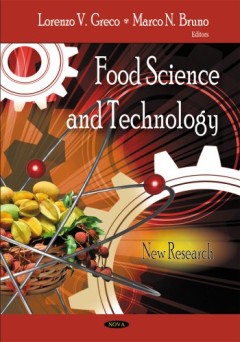
Food science and technology: new research
Food scientists and food technologists study the physical, microbiological, and chemical makeup of food. Depending on their area of specialisation, food scientists may develop ways to process, preserve, package, or store food, according to industry and government specifications and regulations. Consumers seldom think of the vast array of foods and the research and development that has resulted …
- Edition
- -
- ISBN/ISSN
- 9781604567151
- Collation
- xiii, 482 p. : ill. (some col.) ; 26 cm.
- Series Title
- -
- Call Number
- [ITP-LIB-518]

Frozen food science and technology
This book provides a comprehensive source of information on freezing and frozen storage of food. Initial chapters describe the freezing process and provide a fundamental understanding of the thermal and physical processes that occur during freezing. Experts in each stage of the frozen cold chain provide, within dedicated chapters, guidelines and advice on how to freeze food and maintain its qua…
- Edition
- -
- ISBN/ISSN
- 9781405154789
- Collation
- x, 355 p. : ill. ; 26 cm.
- Series Title
- -
- Call Number
- [ITP-LIB-517]
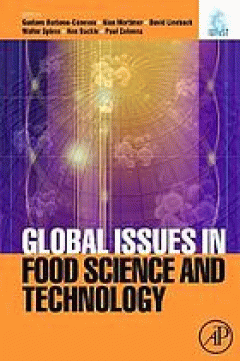
Global issues in food science and technology
A selected compilation of writings by IUFoST organization supporters, Global Themes in Food Science and Technology were those identified as representing the most important and relevant subjects facing food scientists and technologists today. Chosen by an international editorial board, these subjects offer insights into current research and developments and were selected to stimulate additional …
- Edition
- -
- ISBN/ISSN
- 9780123741240
- Collation
- 1 online resource (xvii, 496 pages) : illustration
- Series Title
- -
- Call Number
- [ITP-LIB-516]

Functional food product development
According to an August 2009 report from PricewaterhouseCoopers, the United States market for functional foods in 2007 was US$ 27 billion. Forecasts of growth range from between 8.5% and 20% per year, or about four times that of the food industry in general. Global demand by 2013 is expected to be about $100 billion. With this demand for new products comes a demand for product development and su…
- Edition
- -
- ISBN/ISSN
- 9781405178761
- Collation
- xiv, 512 p. : ill. (some col.), maps ; 25 cm.
- Series Title
- Functional food science and technology series
- Call Number
- [ITP-LIB-515]
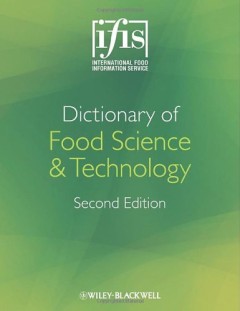
Dictionary of food science and technology
When comparing this dictionary, there is very little competition at all… a very useful resource in the industrial, profession-al and supporting research areas, as well as for non-food scientists who have supervisory and management responsibility in a food area.” –Food & Beverage Reporter, Nov/Dec 2009“I would thoroughly recommend this book to food scientists and technologists throughout…
- Edition
- 2nd ed.
- ISBN/ISSN
- 9781405187404
- Collation
- xii, 473 p. ; 26 cm.
- Series Title
- -
- Call Number
- [ITP-LIB-514]

Gluten-free food science and technology
edited by Eimear Gallagher.
- Edition
- -
- ISBN/ISSN
- 9781405159159
- Collation
- viii, 246 p. : ill. ; 26 cm.
- Series Title
- -
- Call Number
- [ITP-LIB-513]
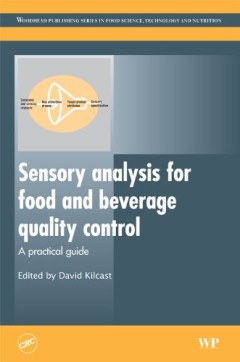
Sensory analysis for food and beverage quality control : a practical guide
Ìn my opinion this book fills a serious hole in commercial sensory literature. This is a comprehensive text on a crucial topic. I will certainly be using it in my courses.' Dr Hal MacFie, Hal MacFie Training Services, UK" "Producing products of reliable quality is vitally important to the food and beverage industry. In particular, companies often fail to ensure that the sensory quality of the…
- Edition
- -
- ISBN/ISSN
- 9781845694760
- Collation
- 1 online resource (xxv, 373 pages) : illustrations
- Series Title
- Woodhead Publishing in food science, technology, and nutrition, no. 191.
- Call Number
- [ITP-LIB-512]
Food science : research and technology
Food Science: Research and Technology presents a broad selection of new research in food science and reflects the diversity of recent advances in the field. Chapters include a study on the use of microbial enzymes for flavor and production in food production; studies of various natural foods, including litchi (lychee), pinto beans, and chickpeas; the content and antioxidant activity of dried pl…
- Edition
- -
- ISBN/ISSN
- 9781926895017
- Collation
- 1 online resource (x, 131 pages) : illustrations
- Series Title
- -
- Call Number
- [ITP-LIB-511]

Food preservation process design
The preservation processes for foods have evolved over several centuries, but recent attention to non-thermal technologies suggests that a new dimension of change has been initiated. The new dimension to be emphasized is the emerging technologies for preservation of foods and the need for sound base of information to be developed as inputs for systematic process design. The focus of the work is…
- Edition
- -
- ISBN/ISSN
- 9780123724861
- Collation
- ix, 354 p. : ill. ; 24 cm.
- Series Title
- Food science and technology international series
- Call Number
- [ITP-LIB-510]
Functional polymers in food science: from technology to biology
Polymers are an important part in everyday life; products made from polymers range from sophisticated articles, such as biomaterials, to aerospace materials. One of the reasons for the great popularity exhibited by polymers is their ease of processing. Polymer properties can be tailored to meet specific needs by varying the “atomic composition” of the repeat structure, by varying molecular …
- Edition
- -
- ISBN/ISSN
- 9781118595183
- Collation
- volumes : illustrations ; 25 cm.
- Series Title
- -
- Call Number
- [ITP-LIB-509]
 Computer Science, Information & General Works
  Philosophy & Psychology
  Religion
  Social Sciences
  Language
  Pure Science
  Applied Sciences
  Art & Recreation
  Literature
  History & Geography