Filter by
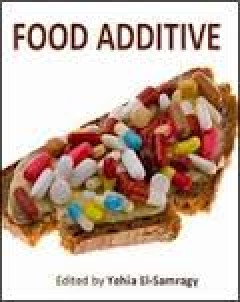
Food Additive
- Edition
- -
- ISBN/ISSN
- 9789535100676
- Collation
- 268 p.
- Series Title
- -
- Call Number
- [ITP-LIB-341]
- Edition
- -
- ISBN/ISSN
- 9789535100676
- Collation
- 268 p.
- Series Title
- -
- Call Number
- [ITP-LIB-341]
Essential guide to food additives
Food additives are the cause of a great deal of discussion and suspicion. Now in its third edition, this definitive title aims to inform this debate and bring the literature right up to date especially focussing on the changes in legislation since the last edition
- Edition
- 3rd ed.
- ISBN/ISSN
- 9781905224500
- Collation
- ix, 336 p. ; 21 cm.
- Series Title
- -
- Call Number
- [ITP-LIB-338]

Colour in food: improving quality
The colour of a food is central to consumer perceptions of quality. This important collection reviews key issues in controlling colour quality in food, from the chemistry of colour in food to measurement issues, improving natural colour and the use of colourings to improve colour quality.
- Edition
- -
- ISBN/ISSN
- 0849315425
- Collation
- xiii, 378 p. : ill. ; 24 cm.
- Series Title
- -
- Call Number
- [ITP-LIB-336]

Food photography: from snapshots to great shots
Are you a “foodie” looking to take eye-catching photos of your culinary concoctions? Do you have a food blog that you’d like to enhance with better visuals? Do you want to create photos that conjure up the flavors of your favorite foods but lack the photographic technique to make it happen? Then this book is for you! In Food Photography: From Snapshots to Great Shots, photographer Nicole …
- Edition
- -
- ISBN/ISSN
- 9780321784117
- Collation
- ix, 277 p. : col. ill. ; 23 cm.
- Series Title
- -
- Call Number
- [KOM-LIB-152]
Introduction to food engineering
R. Paul Singh, Dennis R. Heldman.
- Edition
- 4th ed.
- ISBN/ISSN
- 9780123709004
- Collation
- xxii, 841 p. : ill. ; 26 cm.
- Series Title
- Food science and technology international series
- Call Number
- [ITP-LIB-06]
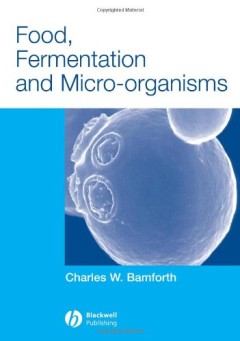
Food, fermentation, and micro-organisms
Fermentation and the use of micro-organisms is one of the most important aspects of food processing, an industry worth billions of US dollars world-wide. From beer and wine to yoghurt and bread, it is the common denominator between many of our foodstuffs.In his engaging style Professor Charles Bamforth covers all known food applications of fermentation. Beginning with the science underpinning f…
- Edition
- -
- ISBN/ISSN
- 9780632059874
- Collation
- xvi, 216 p. : ill. ; 25 cm.
- Series Title
- -
- Call Number
- [ITP-LIB-333]

Food analysis
This book provides information on the techniques needed to analyze foods in laboratory experiments. All topics covered include information on the basic principles, procedures, advantages, limitations, and applications. This book is ideal for undergraduate courses in food analysis and is also an invaluable reference to professionals in the food industry. General information is provided on regula…
- Edition
- 4th ed.
- ISBN/ISSN
- 9781441914774
- Collation
- xiv, 602 p. : ill. ; 29 cm.
- Series Title
- Food science text series
- Call Number
- [ITP-LIB-331]
Statistical methods for food science: introductory procedures for the food pr…
The recording and analysis of food data are becoming increasingly sophisticated. Consequently, the food scientist in industry or at study faces the task of using and understanding statistical methods. Statistics is often viewed as a difficult subject and is often avoided because of its complexity and a lack of specific application to the requirements of food science. This situation is changing …
- Edition
- -
- ISBN/ISSN
- 9781405167642
- Collation
- vii, 307 p. : ill. ; 26 cm.
- Series Title
- -
- Call Number
- [ITP-LIB-328]
Testing of genetically modified organisms in foods
- Edition
- -
- ISBN/ISSN
- 1560222743
- Collation
- xiv, 324 p.: ill. ; 23 cm.
- Series Title
- -
- Call Number
- [ITP-LIB-320]
- Edition
- -
- ISBN/ISSN
- 1560222743
- Collation
- xiv, 324 p.: ill. ; 23 cm.
- Series Title
- -
- Call Number
- [ITP-LIB-320]
Texture in Food: Volume 1: Semi-Solid Foods (Woodhead Publishing in Food Scie…
Texture is one of the most important attributes used by consumers to assess food quality. With its distinguished editor and international team of contributors, this authoritative book summarises the wealth of recent research on what influences texture in solid foods and how it can be controlled to maximise product quality.
- Edition
- -
- ISBN/ISSN
- 9780849325373
- Collation
- vol.1 : ill. ; 24 cm.
- Series Title
- Woodhead Publishing in food science and technology
- Call Number
- [ITP-LIB-319]
 Computer Science, Information & General Works
  Philosophy & Psychology
  Religion
  Social Sciences
  Language
  Pure Science
  Applied Sciences
  Art & Recreation
  Literature
  History & Geography