Filter by

CISM Certified Information Security Manager practice exams
Up-to-date practice questions that cover every topic on the 2022 version of the CISM exam Take the current version of the challenging CISM exam with complete confidence using the detailed information contained in this fully updated self-study guide. Written by an expert in the field, the book features hundreds of practice exam questions that match those on the live test in content, format, tone…
- Edition
- 2nd ed
- ISBN/ISSN
- 9781264697137
- Collation
- 1 online resource (xxiv, 231 pages)
- Series Title
- -
- Call Number
- 005.8076 GRE c

Fennema's food chemistry - 5th. Ed.
This latest edition of the most internationally respected reference in food chemistry for more than 30 years, Fennema’s Food Chemistry, 5th Edition once again meets and surpasses the standards of quality and comprehensive information set by its predecessors. All chapters reflect recent scientific advances and, where appropriate, have expanded and evolved their focus to provide readers with th…
- Edition
- 5th. Ed.
- ISBN/ISSN
- 9781315372914
- Collation
- xx, 1107 hlm. : il. ; 28 cm.
- Series Title
- -
- Call Number
- 664.07 DAM f

Food : The Chemistry of its Components - 7th. Ed.
Since 1984 this book, now in its 7th edition and thoroughly updated, has introduced the crucial interface between our diet and the essentially chemical nature of what we eat and drink. The contributions of the various classes of natural food components, as well as additives and contaminants, to the nutritional value of foods are considered. These include the nutrients required in large amounts …
- Edition
- 7th. Ed.
- ISBN/ISSN
- 9781839168147
- Collation
- xviii, 600 p. : il. ; 24 cm.
- Series Title
- -
- Call Number
- 664.07 COU f
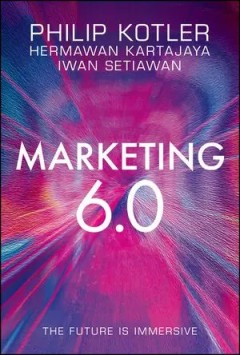
Marketing 6.0: The Future is Immersive
In Marketing 6.0, the celebrated promoter of the “Four P’s of Marketing,” Philip Kotler, explains how marketers can use technology to address customers’ needs and make a difference in the world. In a new age of metamarketing, this book provides marketers with a way to integrate technological and business model evolution with the dramatic shifts in consumer behavior that have happened in…
- Edition
- -
- ISBN/ISSN
- 9781119835387
- Collation
- vii, 247 p.. : il. ; 23 cm.
- Series Title
- -
- Call Number
- 685.8 KOT m
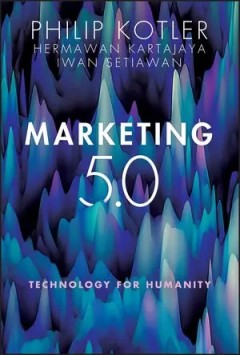
Marketing 5.0: Technology for Humanity
In Marketing 5.0, the celebrated promoter of the “Four P’s of Marketing,” Philip Kotler, explains how marketers can use technology to address customers’ needs and make a difference in the world. In a new age when marketers are struggling with the digital transformation of business and the changing behavior of customers, this book provides marketers with a way to integrate technologica…
- Edition
- -
- ISBN/ISSN
- 9781119668572
- Collation
- xii, 206 p. : il. ; 23 cm.
- Series Title
- -
- Call Number
- 658.8 KOT m
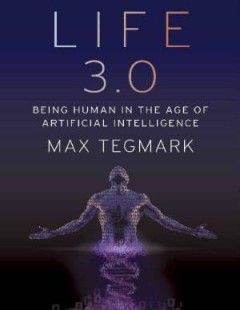
Life 3.0: being human in the age of artificial intelligence
What jobs should be automated? How should our legal systems handle autonomous systems? How likely is the emergence of suprahuman intelligence? A.I. is the future of science, technology, and business--and there is no person better qualified or situated to explore that future than Max Tegmark. What has A.I. brought us? Where will it lead us? The story of A.I. is the story of intelligence--of life…
- Edition
- First edition.
- ISBN/ISSN
- 9781101946596
- Collation
- xii, 364 pages : illustrations ; 25 cm
- Series Title
- -
- Call Number
- 303.4834 TEG l
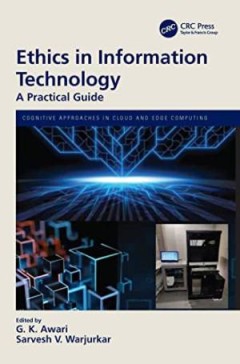
Ethics in information technology: a practical guide
This reference text introduces concepts of computer and Internet crime, ethics in information technology, and privacy techniques. It comprehensively covers important topics including ethical consideration in decision making, security attacks, identification of theft, strategies for consumer profiling, types of intellectual property rights, issues related to intellectual property, process and…
- Edition
- -
- ISBN/ISSN
- 9781032249759
- Collation
- 1 online resource
- Series Title
- Cognitive approaches in cloud and edge computing
- Call Number
- 174.96 REY e
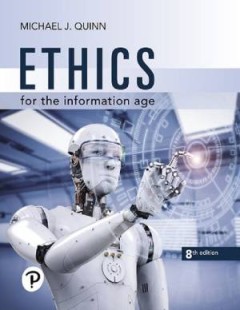
Ethics for the information age
Ethics for the Information Age is suitable for college students at all levels. The only prerequisite is some experience using computers and the Internet. The book is appropriate for a stand-alone "computers and society" or "computer ethics" course offered by a computer science, business, or philosophy department. It can also be used as a supplemental textbook in a technical course that devotes …
- Edition
- 8th ed
- ISBN/ISSN
- 9780135218013
- Collation
- xxvi, 578 pages : illustrations ; 24 cm.
- Series Title
- -
- Call Number
- 174.9 QUI e
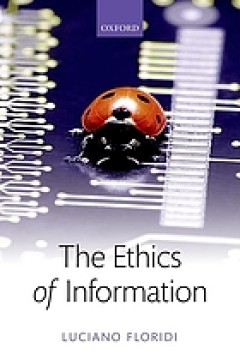
The ethics of information
Luciano Floridi develops the first ethical framework for dealing with the new challenges posed by Information and Communication Technologies (ICTs). He establishes the conceptual foundations of Information Ethics by exploring important metatheoretical and introductory issues, and answering theoretical questions of great philosophical interest
- Edition
- First edition.
- ISBN/ISSN
- 0199641323
- Collation
- xix, 357 pages : illustrations ; 25 cm
- Series Title
- -
- Call Number
- 174.909 FLO e

People, states & fear: an agenda for international security studies in the po…
This widely acclaimed book examines how states and societies pursue freedom from threat in an environment in which competitive relations are inescapable across the political, economic, military, societal and environmental landscapes. Throughout, attention is placed on the interplay of threats and vulnerabilities, the policy consequences of overemphasising one or the other, and the existence of …
- Edition
- 25th anniversary
- ISBN/ISSN
- 9780955248818
- Collation
- 1 online resource (318 pages).
- Series Title
- ECPR classics
- Call Number
- 327.11 BUZ p
 Computer Science, Information & General Works
  Philosophy & Psychology
  Religion
  Social Sciences
  Language
  Pure Science
  Applied Sciences
  Art & Recreation
  Literature
  History & Geography