Filter by

Corporate Social Responsibility in Developing Countries: Challenges in the Ex…
This book examines corporate social responsibility theories and models in the context of developing countries. The developing countries are amongst the poorest countries of the world despite vast natural resources. The natural resources are mismanaged, proceeds are misappropriated, corruption and conflict are centered on resource control. Governments and Multinational Corporations (MNCs) are at…
- Edition
- -
- ISBN/ISSN
- 9783031275128
- Collation
- 1 online resource
- Series Title
- -
- Call Number
- 658.408095 MSO c
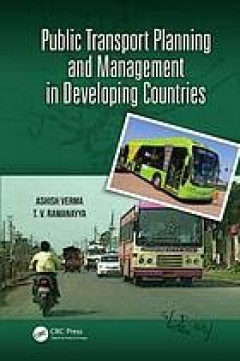
Public transport planning and management in developing countries
Developing Countries Have Different Transportation Issues and Requirements Than Developed Countries. An efficient transportation system is critical for a country's development. Yet cities in developing countries are typically characterized by high-density urban areas and poor public transport, as well as lack of proper roads, parking facilities, road user discipline, and control of land use, re…
- Edition
- -
- ISBN/ISSN
- 9781466581609
- Collation
- -
- Series Title
- -
- Call Number
- [TSI-LIB-155]

The end of the free market: who wins the war between states and corporations?
Understanding the rise of state capitalism and its threat to global free markets The End of the Free Market details the growing phenomenon of state capitalism, a system in which governments drive local economies through ownership of market-dominant companies and large pools of excess capital, using them for political gain. This trend threatens America's competitive edge and the conduct of free …
- Edition
- -
- ISBN/ISSN
- 9781591843016
- Collation
- 230 p. ; 24 cm.
- Series Title
- -
- Call Number
- [POL-LIB-590]
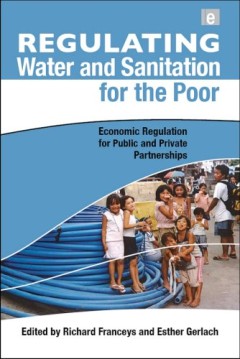
Regulating water and sanitation for the poor: economic regulation for public …
The aim of this book is to present the potential benefits as well as the challenges of introducing a more formal economic regulatory process into the urban water sector arena in lower-income countries. There is a particular focus upon the impact this may have on the poorest, the informal, slum and shanty dwellers of the rapidly growing cities. Economic regulation, usually introduced in the cont…
- Edition
- -
- ISBN/ISSN
- 9781844076178
- Collation
- xviii, 286 p. : ill. ; 25 cm.
- Series Title
- -
- Call Number
- [TLK-LIB-208]
Public health nutrition in developing countries
- Edition
- -
- ISBN/ISSN
- 9789380308067
- Collation
- 2 v. : ill., maps ; 24 cm.
- Series Title
- Woodhead Publishing India in food science, technology and nutrition
- Call Number
- [ITP-LIB-594]
- Edition
- -
- ISBN/ISSN
- 9789380308067
- Collation
- 2 v. : ill., maps ; 24 cm.
- Series Title
- Woodhead Publishing India in food science, technology and nutrition
- Call Number
- [ITP-LIB-594]
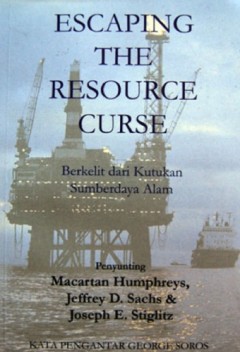
Escaping the resource curse : Berkelit dari Kutukan Sumber Daya Alam
- Edition
- -
- ISBN/ISSN
- 978-979-17013-0-3
- Collation
- xviii, 408 p. : ill. ; 24 cm.
- Series Title
- Initiative for Policy Dialogue at Columbia (Series)
- Call Number
- [POL-LIB-547]
- Edition
- -
- ISBN/ISSN
- 978-979-17013-0-3
- Collation
- xviii, 408 p. : ill. ; 24 cm.
- Series Title
- Initiative for Policy Dialogue at Columbia (Series)
- Call Number
- [POL-LIB-547]
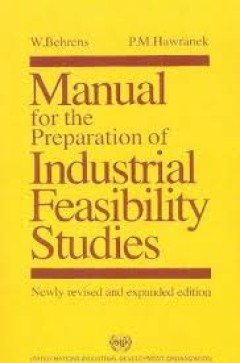
Manual for the preparation of industrial feasibility studies
W. Behrens, P.M. Hawranek.
- Edition
- Newly rev. and expanded ed.
- ISBN/ISSN
- 9211062691
- Collation
- xii, 386 p. : ill. (some col.) ; 24 cm.
- Series Title
- -
- Call Number
- [TIN-LIB-117]
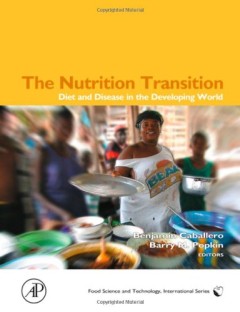
The nutrition transition: diet and disease in the developing world
This book deals with the dramatic changes in diet and lifestyle that are occurring in the developing world as a result of globalization, and their impact on human healt. The Editors have assembled a leading group of scientists in teh fields of economics, population sciences, international health, medicine, nutrition and food sciences, to address each of the key issues related to the changes in …
- Edition
- -
- ISBN/ISSN
- 0121536548
- Collation
- xi, 261 p. : ill., col. maps ; 26 cm.
- Series Title
- Food science and technology international series
- Call Number
- [ITP-LIB-317]
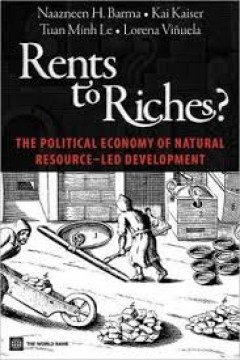
Rents to riches?: the political economy of natural resource-led development
Naazneen H. Barma ... [et al.].
- Edition
- -
- ISBN/ISSN
- 9780821384800
- Collation
- xix, 276 p. : ill., maps ; 23 cm.
- Series Title
- -
- Call Number
- [POL-LIB-429]
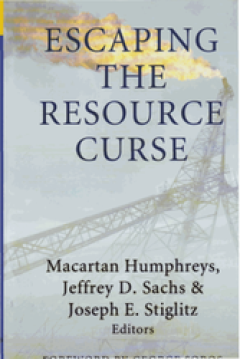
Escaping the resource curse
The wealth derived from natural resources can have a tremendous impact on the economics and politics of producing countries. In the last quarter century, we have seen the surprising and sobering consequences of this wealth, producing what is now known as the "resource curse." Countries with large endowments of natural resources, such as oil and gas, often do worse than their poorer neighbors. T…
- Edition
- -
- ISBN/ISSN
- 9780231141963
- Collation
- xviii, 408 p. : ill. ; 24 cm.
- Series Title
- Initiative for Policy Dialogue at Columbia (Series)
- Call Number
- [POL-LIB-423]
 Computer Science, Information & General Works
  Philosophy & Psychology
  Religion
  Social Sciences
  Language
  Pure Science
  Applied Sciences
  Art & Recreation
  Literature
  History & Geography