Filter by
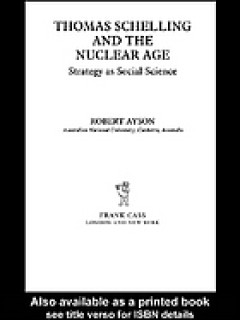
Thomas Schelling and the nuclear age : strategy as social science
This book provides an insight into the work of Thomas Schelling, one of the most influential strategic thinkers of the nuclear age. By the time of the Cuban Missile Crisis and the United States' early forays into Vietnam, he had become one of the most distinctive voices in Western strategy. This book shows how Schelling's thinking is much more than a reaction to the tensions of the Cold War. In…
- Edition
- -
- ISBN/ISSN
- 0714655163
- Collation
- 1 online resource (xi, 235 p.)
- Series Title
- Cass series--strategy and history, 10.
- Call Number
- [POL-SSS-58]
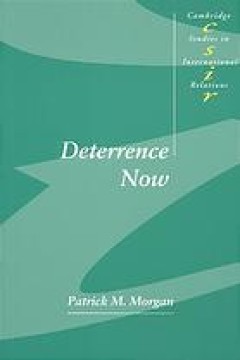
Deterrence now
This authoritative book examines the place of deterrence after the Cold War. Patrick Morgan explores the state of deterrence theory and its continuing relevance under conditions of nuclear proliferation, collective security organisations, and a revolution in military affairs. This book makes a significant contribution to strategic studies and international relations.
- Edition
- -
- ISBN/ISSN
- 9780521822572
- Collation
- 1 online resource (xx, 331 p.)
- Series Title
- Cambridge studies in international relations, 89.
- Call Number
- [POL-SSS-18]
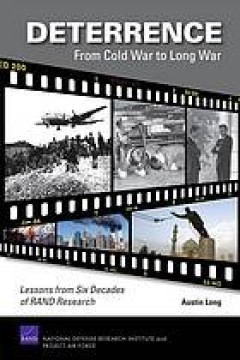
Deterrence : from Cold War to long war : lessons from six decades of Rand det…
Since its inception six decades ago, the RAND Corporation has been one of the key institutional homes for the study of deterrence. This book examines much of this research for lessons relevant to the current and future strategic environment. It is therefore part intellectual history and part policy recommendation, intended to encourage debate and discussion on how deterrence can best be incorpo…
- Edition
- -
- ISBN/ISSN
- 9780833044822
- Collation
- xiv, 107 p. ; 23 cm.
- Series Title
- -
- Call Number
- [POL-SSS-17]
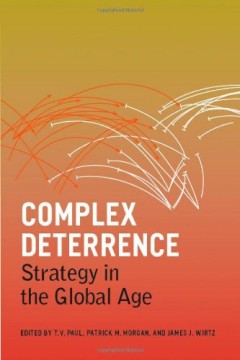
Complex deterrence : strategy in the global age
As the costs of a preemptive foreign policy in Iraq have become clear, strategies such as containment and deterrence have been gaining currency among policy makers. This comprehensive book offers an agenda for the contemporary practice of deterrence--especially as it applies to nuclear weapons--in an increasingly heterogeneous global and political setting. Moving beyond the precepts of traditio…
- Edition
- -
- ISBN/ISSN
- 9780226650029
- Collation
- 1 online resource (x, 345 p.) : ill.
- Series Title
- -
- Call Number
- [POL-SSS-11]
 Computer Science, Information & General Works
  Philosophy & Psychology
  Religion
  Social Sciences
  Language
  Pure Science
  Applied Sciences
  Art & Recreation
  Literature
  History & Geography