Filter by
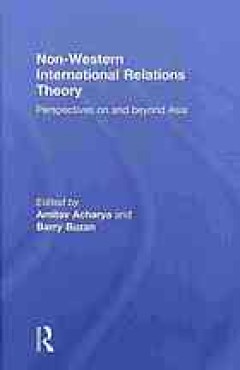
Non-Western international relations theory : perspectives on and beyond Asia
Introduces non-Western IR traditions to a Western IR audience, and challenges the dominance of Western theory. This book challenges criticisms that IR theory is Western-focused and therefore misrepresents much of world history by introducing the reader to non-Western traditions, literature and histories relevant to how IR is conceptualised.
- Edition
- -
- ISBN/ISSN
- 0415474736
- Collation
- 242 p. : ill. ; 25 cm.
- Series Title
- -
- Call Number
- [POL-IRT-45]
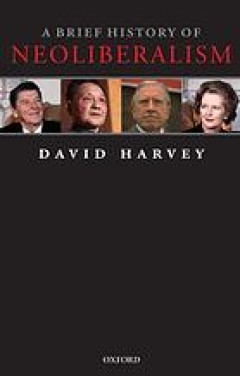
A brief history of neoliberalism
"David Harvey, author of The Condition of Postmodernity and The New Imperialism, here tells the political-economic story of where neoliberalization came from and how it proliferated on the world stage. While Thatcher and Reagan are often cited as primary authors of this neoliberal turn, Harvey shows how a complex of forces, from Chile to China and from New York City to Mexico City, have also pl…
- Edition
- -
- ISBN/ISSN
- 0199283265
- Collation
- vii, 247 p. : ill., maps ; 23 cm.
- Series Title
- -
- Call Number
- [POL-IRT-43]
Neoliberal hegemony : a global critique
Provides an explanation of neoliberal hegemony, which systematically considers and analyzes the networks and organizations of around 1,000 self-conscious neoliberal intellectuals organized in the Mont Pelerin Society.
- Edition
- -
- ISBN/ISSN
- 0415373271
- Collation
- xviii, 294 p. : ill. ; 24 cm.
- Series Title
- RIPE series in global political economy.; Routledge/RIPE studies in global political economy, 18.
- Call Number
- [POL-IRT-42]
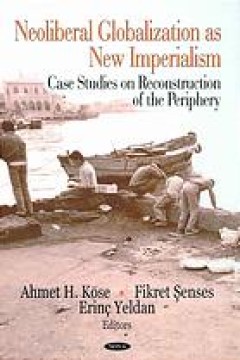
Neoliberal globalization as new imperialism : case studies on reconstruction …
Attempts to bring together a variety of contributions on the ideology of neo-liberal globalisation as a new phase of global capitalism-cum-imperialism. This book addresses the diverse economic structures of the global periphery and tries to deduce lessons on the global crisis conjuncture of global capital in governing the world.
- Edition
- -
- ISBN/ISSN
- 9781606927465
- Collation
- xiv, 275 p. : ill. ; 26 cm.
- Series Title
- -
- Call Number
- [POL-IRT-41]
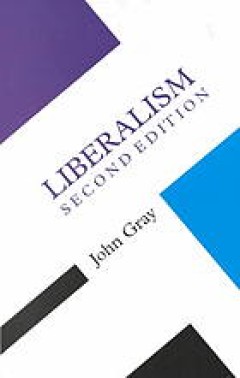
Liberalism
Since the publication in 1986 of the first edition of Liberalism, both the world and the author's views have changed significantly. In this new edition, John Gray argues that whereas liberalism was the political theory of modernity, it is ill equipped to cope with the dilemmas of the postmodern condition. The task now, as Gray sees it, is to develop a pluralist theory in which the liberal probl…
- Edition
- 2nd ed
- ISBN/ISSN
- 0816628009
- Collation
- xiii, 113 p. ; 23 cm.
- Series Title
- Concepts in social thought.
- Call Number
- [POL-IRT-37]
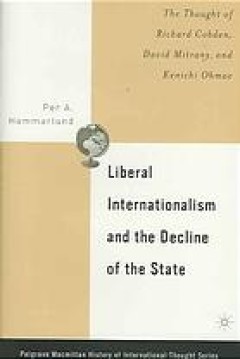
Liberal internationalism and the decline of the state : the thought of Richar…
Liberal international thought contains a long-standing tradition of portraying the imminent decline of the nation-state. After all, some thinkers claim, national governments can no longer control their individual economies, as a result of economic globalization. The nation-state has become an anachronism. It stands in the way of a peaceful and prosperous cosmopolitan world order. It is a war or…
- Edition
- 1st ed
- ISBN/ISSN
- 1403967032
- Collation
- xii, 226 p. ; 21 cm.
- Series Title
- -
- Call Number
- [POL-IRT-36]
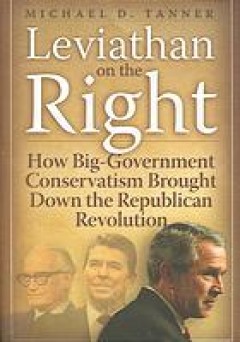
Leviathan on the Right : how big-government conservatism brought down the Rep…
Despite an ostensibly conservative Republican president and Republican control of Congress, government is bigger and more intrusive than ever. That is not by accident; it is the conscious aim of a new brand of conservatism that seeks, not to reduce the size of government, but to use big government for conservative ends. This book shows how the Bush administration, Congress, and large parts of t…
- Edition
- -
- ISBN/ISSN
- 1933995009
- Collation
- ix, 321 p. : ill. ; 24 cm.
- Series Title
- -
- Call Number
- [POL-IRT-35]
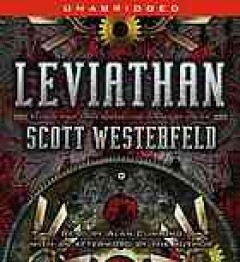
Leviathan
In an alternate 1914 Europe, fifteen-year-old Austrian Prince Alek, on the run from the Clanker Powers who are attempting to take over the globe using mechanical machinery, forms an uneasy alliance with Deryn who, disguised as a boy to join the British Air Service, is learning to fly genetically-engineered beasts.
- Edition
- -
- ISBN/ISSN
- 9781416971733
- Collation
- 7 sound discs (ca. 8 hr., 30 min.) : digital ; 4 3
- Series Title
- -
- Call Number
- [POL-IRT-34]

Liberalism and the limits of power
"This book provides the first critical assessment of important recent developments in Anglo-American liberal theorizing about limited government. Following a comparative study of canonical liberal philosophers Hayek and Rawls, Juliet A. Williams reveals a new direction for conceptualizing limited government in the twenty-first century, highlighting the central role that democratic politics - ra…
- Edition
- -
- ISBN/ISSN
- 140397103X
- Collation
- xi, 176 p. ; 22 cm.
- Series Title
- -
- Call Number
- [POL-IRT-32]

Profit over people : Neoliberalismus und globale Weltordnung
Noam Chomsky, 84, is doubtless one of the leading American thinkers in the field of political economy. “Profit over people” is a short, but insightful collection of essays, written during the last decade of the 20th century. The book offers a brilliant selection of historic examples. Every single statement is supported with powerful evidence. For example, in the chapter “Neoliberalism and…
- Edition
- -
- ISBN/ISSN
- 320376010X
- Collation
- 158 S. ; 22 cm.
- Series Title
- Profit over people.
- Call Number
- [POL-IRT-31]
 Computer Science, Information & General Works
  Philosophy & Psychology
  Religion
  Social Sciences
  Language
  Pure Science
  Applied Sciences
  Art & Recreation
  Literature
  History & Geography