Filter by

The ghost of Napoleon
B. H. Liddell Hart believes that "thought working on thought is the most influential process in history. Yet, being intangible, it is less perceptible than the effects of action, and has always received far less attention than it deserves." In THE GHOST OF NAPOLEON, Liddell Hart concentrates on two of these intellections, each of which vitally affected the course of history in the last two c…
- Edition
- -
- ISBN/ISSN
- 0313221723
- Collation
- 199 p. 21 cm.
- Series Title
- -
- Call Number
- [POL-SSS-64]
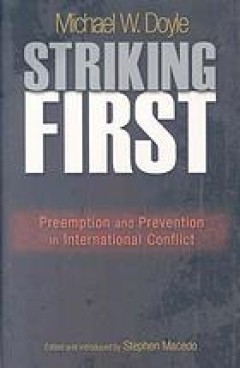
Striking first : preemption and prevention in international conflict
Tackling one of the most controversial policy issues of the post-September 11 world, this title argues that neither the Bush Doctrine nor customary international law is capable of adequately responding to the pressing security threats of our times.
- Edition
- -
- ISBN/ISSN
- 9780691136585
- Collation
- xxiv, 175 p. ; 23 cm.
- Series Title
- University Center for Human Values series
- Call Number
- [POL-SSS-63]

Striking first : preemptive and preventive attack in U.S. national security p…
RAND Project AIR FORCE studied the post-9/11 shift in US defense policy emphasis toward preemptive and preventive attack, asking under what conditions preemptive or preventive attack is worth considering as a response to perceived threats. It considered the role such first-strike strategies are likely to play in future US national security policy.
- Edition
- -
- ISBN/ISSN
- 0833038818
- Collation
- 1 online resource (xxxi, 311 p.)
- Series Title
- Rand Corporation monograph series
- Call Number
- [POL-SSS-62]
Strategy in transition
The bursting of the 'dotcom bubble' and the terrorist attacks of September 11, 2001, have brought into question received wisdom about strategy. This volume reviews the lessons to be learnt from these events, and proposes that, as a result, strategy in the twenty-first century will have to develop along new lines. Comprising a series of outstanding contributions by experts in the field, the coll…
- Edition
- -
- ISBN/ISSN
- 1405118490
- Collation
- ix, 307 p. : ill. ; 26 cm.
- Series Title
- Strategic Management Society book series.
- Call Number
- [POL-SSS-61]

Strategy in the missile age
Reviews the development of modern military strategy to World War II, and considers new problems and new approaches. The study was undertaken by the Rand Corporation as a part of its research program for the United States Air Force.
- Edition
- -
- ISBN/ISSN
- 0691018529
- Collation
- vii, 423 p. 23 cm.
- Series Title
- Rand corporation.
- Call Number
- [POL-SSS-60]
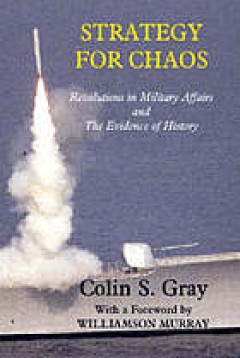
Strategy for chaos : revolutions in military affairs and the evidence of history
"In Strategy for Chaos, Professor Colin Gray develops and applies the theory and scholarship on the allegedly historical practice of the 'Revolution in Military Affairs' (RMA), in order to improve our comprehension of how and why strategy 'works'." "This is a brilliantly researched and thought-provoking book by one of the key thinkers in the field, and will be essential reading for all scholars…
- Edition
- -
- ISBN/ISSN
- 071468483X
- Collation
- xvi, 310 p. : ill. ; 25 cm.
- Series Title
- Cass series--strategy and history, 2.
- Call Number
- [POL-SSS-59]
Thomas Schelling and the nuclear age : strategy as social science
This book provides an insight into the work of Thomas Schelling, one of the most influential strategic thinkers of the nuclear age. By the time of the Cuban Missile Crisis and the United States' early forays into Vietnam, he had become one of the most distinctive voices in Western strategy. This book shows how Schelling's thinking is much more than a reaction to the tensions of the Cold War. In…
- Edition
- -
- ISBN/ISSN
- 0714655163
- Collation
- 1 online resource (xi, 235 p.)
- Series Title
- Cass series--strategy and history, 10.
- Call Number
- [POL-SSS-58]
Strategy and the social sciences : issues in defence policy
- Edition
- -
- ISBN/ISSN
- 0714631574
- Collation
- 1 online resource (100 p.)
- Series Title
- -
- Call Number
- [POL-SSS-56]
- Edition
- -
- ISBN/ISSN
- 0714631574
- Collation
- 1 online resource (100 p.)
- Series Title
- -
- Call Number
- [POL-SSS-56]
Strategy and history : essays on theory and practice
Comprises a selection of Professor Gray's key contributions to strategic debate. Each essay in this book is about strategy in the modern world, and reflects the many dimensions of this complex subject. Covering a range of subjects and historical events, it is of interest to students and analysts of strategy and international studies.
- Edition
- -
- ISBN/ISSN
- 0415386349
- Collation
- xii, 234 p. ; 24 cm.
- Series Title
- Cass series--strategy and history, 15.
- Call Number
- [POL-SSS-55]

Strategy and capability : sustaining organizational change
Modern managers and students of management are inundated with advice on how to change organizations in order to improve effectiveness. This book makes sense of all this competing advice, considering the best ways for organizations to develop their strategic capabilities in a fast-changing world.
- Edition
- -
- ISBN/ISSN
- 0631228454
- Collation
- xv, 201 p. : ill. ; 26 cm.
- Series Title
- Management, organizations, and business series
- Call Number
- [POL-SSS-54]
 Computer Science, Information & General Works
  Philosophy & Psychology
  Religion
  Social Sciences
  Language
  Pure Science
  Applied Sciences
  Art & Recreation
  Literature
  History & Geography