Filter by
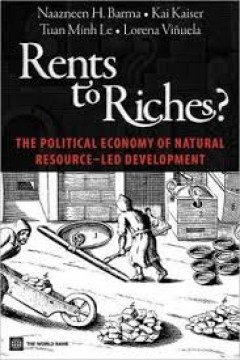
Rents to riches?: the political economy of natural resource-led development
Naazneen H. Barma ... [et al.].
- Edition
- -
- ISBN/ISSN
- 9780821384800
- Collation
- xix, 276 p. : ill., maps ; 23 cm.
- Series Title
- -
- Call Number
- [POL-LIB-429]
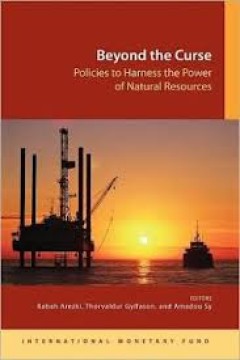
Beyond the curse: policies to harness the power of natural resources
editors, Rabah Arezki, Thorvaldur Gylfason, and Amadou Sy.
- Edition
- -
- ISBN/ISSN
- 9781616351458
- Collation
- xi, 275 p. ; 23 cm.
- Series Title
- -
- Call Number
- [POL-LIB-428]
Natural resources in Latin America and the Caribbean: beyond booms and busts?
Emily Sinnott, John Nash, Augusto de la Torre.
- Edition
- -
- ISBN/ISSN
- 9780821384824
- Collation
- xi, 82 p. : ill. ; 28 cm.
- Series Title
- World Bank Latin American and Caribbean studies
- Call Number
- [POL-LIB-427]
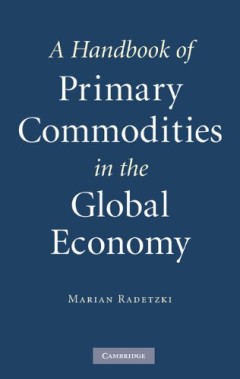
The handbook of primary commodities in the global economy
The world is going through an exceptional commodity boom triggered by a global demand shock largely caused by the sudden emergence of China and India as sizeable raw material importers. Prices of numerous commodities tripled between 2003 and 2006, resulting in huge windfalls for producers and a financial squeeze on consumers. A Handbook of Primary Commodities in the Global Economy is a guide to…
- Edition
- -
- ISBN/ISSN
- 9780521880206
- Collation
- x, 233 p. : ill. ; 24 cm.
- Series Title
- -
- Call Number
- [POL-LIB-426]
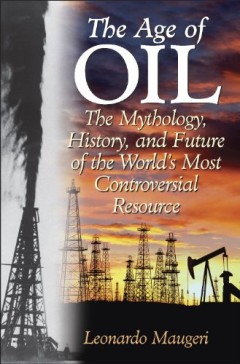
The age of oil: the mythology, history, and future of the world's most contro…
Excellent and very interesting book. It contains a clear history of the oil industry and it's relevant events in modern history. Highly recommended for anybody interested in economics, politics and history.
- Edition
- -
- ISBN/ISSN
- 0275990087
- Collation
- xx, 340 p. ; 25 cm.
- Series Title
- -
- Call Number
- [POL-LIB-425]
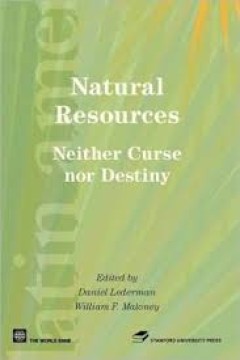
Natural resources, neither curse nor destiny
Customers in the US and Canada please order from Stanford University Press at (800) 621-2736 or visit their website at www.sup.org. 'Natural Resources: Neither Course nor Destiny' brings together a variety of analytical perspectives, ranging from econometric analyses of economic growth to historical studies of successful development experiences in countries with abundant natural resources. The …
- Edition
- -
- ISBN/ISSN
- 9780821365458
- Collation
- xx, 369 p. : ill. ; 23 cm.
- Series Title
- Latin America development forum
- Call Number
- [POL-LIB-424]
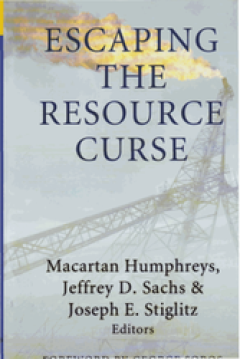
Escaping the resource curse
The wealth derived from natural resources can have a tremendous impact on the economics and politics of producing countries. In the last quarter century, we have seen the surprising and sobering consequences of this wealth, producing what is now known as the "resource curse." Countries with large endowments of natural resources, such as oil and gas, often do worse than their poorer neighbors. T…
- Edition
- -
- ISBN/ISSN
- 9780231141963
- Collation
- xviii, 408 p. : ill. ; 24 cm.
- Series Title
- Initiative for Policy Dialogue at Columbia (Series)
- Call Number
- [POL-LIB-423]
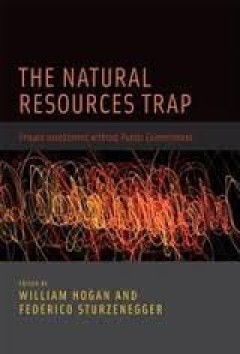
The natural resources trap: private investment without public commitment
Volatility in commodity prices has been accompanied by perpetual renegotiation of contracts between private investors in natural resource production and the governments of states with mineral and energy wealth. When prices skyrocket, governments want a larger share of revenues, sometimes to the point of nationalization or expropriation; when prices fall, larger state participation becomes a bur…
- Edition
- -
- ISBN/ISSN
- 9780262013796
- Collation
- xiv, 519 p. : ill. ; 24 cm.
- Series Title
- -
- Call Number
- [POL-LIB-422]
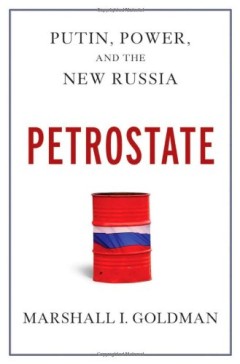
Petrostate: Putin, power, and the new Russia
- Edition
- -
- ISBN/ISSN
- 9780195340730
- Collation
- x, 244 p. : ill., map ; 24 cm.
- Series Title
- -
- Call Number
- [POL-LIB-421]
- Edition
- -
- ISBN/ISSN
- 9780195340730
- Collation
- x, 244 p. : ill., map ; 24 cm.
- Series Title
- -
- Call Number
- [POL-LIB-421]
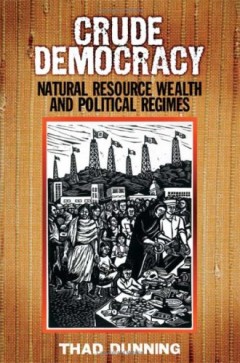
Crude democracy: natural resource wealth and political regimes
This book challenges the conventional wisdom that natural resource wealth promotes autocracy. Oil and other forms of mineral wealth can promote both authoritarianism and democracy, the book argues, but they do so through different mechanisms; an understanding of these different mechanisms can help elucidate when either the authoritarian or democratic effects of resource wealth will be relativel…
- Edition
- -
- ISBN/ISSN
- 9780521515009
- Collation
- xx, 327 p. ; 24 cm.
- Series Title
- Cambridge studies in comparative politics
- Call Number
- [POL-LIB-420]
 Computer Science, Information & General Works
  Philosophy & Psychology
  Religion
  Social Sciences
  Language
  Pure Science
  Applied Sciences
  Art & Recreation
  Literature
  History & Geography