Filter by
Progress in international relations theory : appraising the field
An investigation of how international relations theorists can best evaluate the effectiveness of their discipline.
- Edition
- -
- ISBN/ISSN
- 0262050684
- Collation
- xiv, 503 p. ; 24 cm.
- Series Title
- BCSIA studies in international security
- Call Number
- [POL-IRT-49]
Political thought and international relations : variations on a realist theme
Political realism dominated the study of international relations during the Cold War and has again in recent years retuned to the centre of scholarly debate in international relations. In this book leading authors analyse various historical and philosophical themes, probing the potential and the pathologies of realist thought.
- Edition
- -
- ISBN/ISSN
- 9780199556274
- Collation
- 1 online resource (245 p.)
- Series Title
- -
- Call Number
- [POL-IRT-48]
Political theory and international relations
"Political Theory and International Relations is a fine piece of philosophical criticism and reconstruction that few established philosophers could have written.... This is a first-rate book on an issue as fundamental as it is neglected."--Henry Shue, Ethics
- Edition
- -
- ISBN/ISSN
- 0691076146
- Collation
- ix, 212 p. ; 23 cm.
- Series Title
- -
- Call Number
- [POL-IRT-47]
Non-Western international relations theory : perspectives on and beyond Asia
Introduces non-Western IR traditions to a Western IR audience, and challenges the dominance of Western theory. This book challenges criticisms that IR theory is Western-focused and therefore misrepresents much of world history by introducing the reader to non-Western traditions, literature and histories relevant to how IR is conceptualised.
- Edition
- -
- ISBN/ISSN
- 0415474736
- Collation
- 242 p. : ill. ; 25 cm.
- Series Title
- -
- Call Number
- [POL-IRT-45]
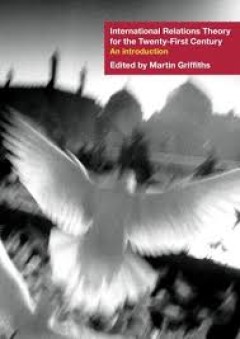
International relations theory for the twenty-first century : an introduction
International Relations theory has been the site of intense debate in recent years. A decade ago it was still possible to divide the field between three main perspectives - Realism, Liberalism, and Marxism. Not only have these approaches evolved in new directions, they have been joined by a number of new 'isms' vying for attention, including feminism and constructivism. International Relations …
- Edition
- -
- ISBN/ISSN
- 0415380758
- Collation
- ix, 184 p. ; 26 cm.
- Series Title
- -
- Call Number
- [POL-IRT-30]
International relations theory : a critical introduction
Introducing students to the main theories in international relations, this textbook also deconstructs each theory, allowing students to engage critically with the assumptions and myths that underpin them.
- Edition
- 3rd ed
- ISBN/ISSN
- 0415778190
- Collation
- xxiv, 239 p. : ill. ; 26 cm.
- Series Title
- -
- Call Number
- [POL-IRT-29]
International relations theory : a critical introduction
This innovative textbook introduces students to the main theories in international relations. The 2nd edition includes new chapters on the 'clash of civilizations' and Empire.
- Edition
- 2nd ed
- ISBN/ISSN
- 0415342074
- Collation
- 1 online resource (xxii, 199 p.) : ill.
- Series Title
- -
- Call Number
- [POL-IRT-28]
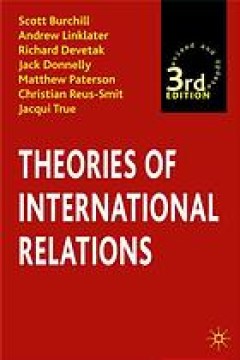
Theories of international relations
A wide-ranging introduction to the main theoretical approaches to the study of international relations, this work examines nine theoretical traditions, beginning with the established orthodoxies of liberal internationalism and realism.
- Edition
- 3rd ed
- ISBN/ISSN
- 9781403948656
- Collation
- x, 310 p. ; 24 cm.
- Series Title
- -
- Call Number
- [POL-IRT-27]
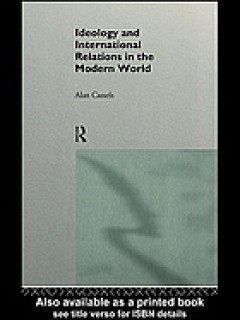
Ideology and international relations in the modern world
Cassels traces the part played by ideology in in ternational relations over the past two centuries. Incorporating political, social, cultural and economic factors he establishes links between ideas and action, ideology and political behaviour.
- Edition
- -
- ISBN/ISSN
- 041511926X
- Collation
- 1 online resource (xiii, 302 p.)
- Series Title
- New international history series.
- Call Number
- [POL-IRT-26]
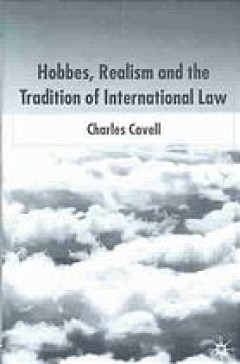
Hobbes, realism, and the tradition of international law
"In Hobbes, Realism and the Tradition of International Law, Charles Covell examines the political thought of Hobbes from the standpoint of the agenda in international studies. The intention here is to challenge the reading of Hobbes as the representative of the realist tradition in international relations, and to do this through the situating of Hobbes within the tradition of international law …
- Edition
- -
- ISBN/ISSN
- 0333761545
- Collation
- vi, 194 p. ; 23 cm.
- Series Title
- -
- Call Number
- [POL-IRT-25]
 Computer Science, Information & General Works
  Philosophy & Psychology
  Religion
  Social Sciences
  Language
  Pure Science
  Applied Sciences
  Art & Recreation
  Literature
  History & Geography