Filter by
Liberalism, democracy, and development
Sylvia Chan examines the claim that liberal democracy on the Western model is the paradigm to which developing countries should aspire to provide good governance and economic success. The success of some countries, notably in Asia, which do not conform to that model has led many to question that link. Chan argues that these successful developing nations have enjoyed the economic and social libe…
- Edition
- -
- ISBN/ISSN
- 9780521004985
- Collation
- viii, 273 p. ; 23 cm.
- Series Title
- -
- Call Number
- [POL-LIB-472]
Strong democracy : participatory politics for a new age
Since its appearance twenty years ago, Benjamin R. Barber's Strong Democracy has been one of the primary standards against which political science thinking and writing is measured. Defined as the participation of all of the people in at least some aspects of self government at least some of the time, Strong Democracy offers liberal society a new way of thinking about and practicing democracy. B…
- Edition
- -
- ISBN/ISSN
- 9780520242333
- Collation
- xxxvi, 320 p. ; 23 cm.
- Series Title
- -
- Call Number
- [POL-LIB-470]
Multicultural citizenship: a liberal theory of minority rights
The increasingly multicultural fabric of modern societies has given rise to many new issues and conflicts, as ethnic and national minorities demand recognition and support for their cultural identity. This book presents a new conception of the rights and status of minority cultures. It argues that certain sorts of `collective rights' for minority cultures are consistent with liberal democratic …
- Edition
- -
- ISBN/ISSN
- 9780198279495
- Collation
- vii, 280 p. ; 24 cm.
- Series Title
- Oxford political theory
- Call Number
- [POL-LIB-462]
Tocqueville, Lieber, and Bagehot : liberalism confronts the world
"Alexis de Tocqueville, Francis Lieber, and Walter Bagehot are all mid-19th-century liberals who both commented on and helped to shape public affairs in the three premier liberal countries of the time: France, the United States, and Britain. Each also had an interest in international politics that stemmed from certain aspects of his broader political philosophy. But what did liberalism mean in …
- Edition
- -
- ISBN/ISSN
- 1403962472
- Collation
- x, 159 p. ; 22 cm.
- Series Title
- Palgrave Macmillan series on the history of international thought.
- Call Number
- [POL-IRT-38]
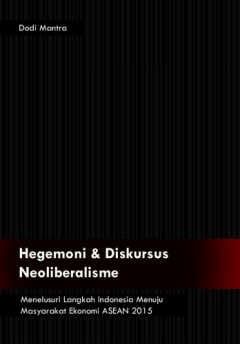
Hegemoni dan Diskursus Neoliberalisme
- Edition
- -
- ISBN/ISSN
- 9786021907603
- Collation
- 254 halaman, i -xiv, 16 x 23 cm
- Series Title
- -
- Call Number
- [POL-LIB-413]
- Edition
- -
- ISBN/ISSN
- 9786021907603
- Collation
- 254 halaman, i -xiv, 16 x 23 cm
- Series Title
- -
- Call Number
- [POL-LIB-413]
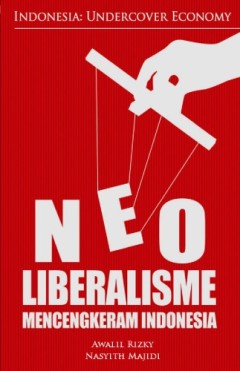
Neoliberalisme mencengkeram Indonesia: IMF, World Bank, WTO sumber bencana ek…
Wishnu H.K.P. Notonagoro.
- Edition
- Cet. 1.
- ISBN/ISSN
- 9786029826517
- Collation
- xviii, 164 p. : col. ill. ; 21 cm.
- Series Title
- -
- Call Number
- [POL-LIB-407]
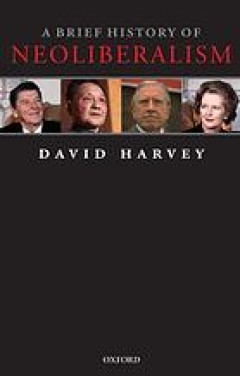
A brief history of neoliberalism
"David Harvey, author of The Condition of Postmodernity and The New Imperialism, here tells the political-economic story of where neoliberalization came from and how it proliferated on the world stage. While Thatcher and Reagan are often cited as primary authors of this neoliberal turn, Harvey shows how a complex of forces, from Chile to China and from New York City to Mexico City, have also pl…
- Edition
- -
- ISBN/ISSN
- 0199283265
- Collation
- vii, 247 p. : ill., maps ; 23 cm.
- Series Title
- -
- Call Number
- [POL-IRT-43]
Neoliberal hegemony : a global critique
Provides an explanation of neoliberal hegemony, which systematically considers and analyzes the networks and organizations of around 1,000 self-conscious neoliberal intellectuals organized in the Mont Pelerin Society.
- Edition
- -
- ISBN/ISSN
- 0415373271
- Collation
- xviii, 294 p. : ill. ; 24 cm.
- Series Title
- RIPE series in global political economy.; Routledge/RIPE studies in global political economy, 18.
- Call Number
- [POL-IRT-42]
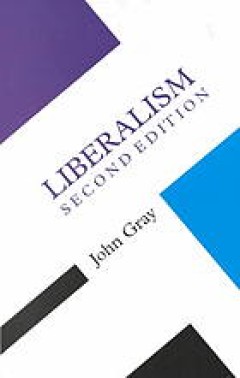
Liberalism
Since the publication in 1986 of the first edition of Liberalism, both the world and the author's views have changed significantly. In this new edition, John Gray argues that whereas liberalism was the political theory of modernity, it is ill equipped to cope with the dilemmas of the postmodern condition. The task now, as Gray sees it, is to develop a pluralist theory in which the liberal probl…
- Edition
- 2nd ed
- ISBN/ISSN
- 0816628009
- Collation
- xiii, 113 p. ; 23 cm.
- Series Title
- Concepts in social thought.
- Call Number
- [POL-IRT-37]
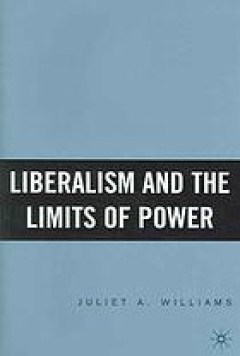
Liberalism and the limits of power
"This book provides the first critical assessment of important recent developments in Anglo-American liberal theorizing about limited government. Following a comparative study of canonical liberal philosophers Hayek and Rawls, Juliet A. Williams reveals a new direction for conceptualizing limited government in the twenty-first century, highlighting the central role that democratic politics - ra…
- Edition
- -
- ISBN/ISSN
- 140397103X
- Collation
- xi, 176 p. ; 22 cm.
- Series Title
- -
- Call Number
- [POL-IRT-32]
 Computer Science, Information & General Works
  Philosophy & Psychology
  Religion
  Social Sciences
  Language
  Pure Science
  Applied Sciences
  Art & Recreation
  Literature
  History & Geography