Computer File
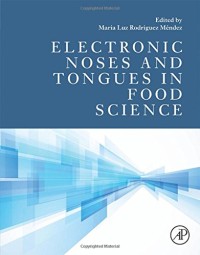
Electronic noses and tongues in food science
Electronic Nose and Tongue in Food Science describes the electronic products of advanced chemical and physical sciences combined with intuitive integration of microprocessors, advanced bioinformatics and statistics. These include, for example, voltammetric, bio-electronic, piezoelectric platforms made from a variety of components including, nanoparticles, enzyme biosensors, heavy metals, graphite-epoxy composites, metal oxide semiconductors, microelectrodes, microfluidic channels, pre-manufactured gas sensors, redox enzymes and others and is an ideal resource for understanding and utilizing their power in Food Science settings.
Devices used to analyse one particular food item can theoretically be adapted for other food items or components. This does not just mean the re-deploying the physical platforms but also the mode of bioinformatic and statistical analysis. This includes artificial neural networks (ANN), linear discriminant analysis (LDA), partial least squares (PLS), principal component analysis (PCA) etc. In other words, there is cross transference of chemistry, physics, concepts, techniques, findings and approaches from one food to another. Electronic noses and tongues are two of these devices but are advancing in application and importance.
This book provides examples of the use of electronic noses and tongues to characterise components that contribute to sensory or compositional profiles, from ripening to harvesting and from storage of raw materials to packaging and consumption. These devises are suitable for high-throughput analysis, quality control or to determine the nature and extent of spoilage and adulteration, and have also been used to ascertain the geographical origins of food and mixtures.
Presents latest developments in the application of electronic nose and tongue technologies to a variety of food-specific needsIncludes both electronic nose, electronic tongue and combined technology insightsEach chapter has sections on: The physical and chemical platforms; Analysis of specific foods; Applications to other foods and areas of food science
Availability
Detail Information
- Series Title
-
-
- Call Number
-
[ITP-LIB-128]
- Publisher
- ne : Elsevier/Academic Press., 2016
- Collation
-
xv, 316 pages : illustrations (some color) ; 29 cm
- Language
-
English
- ISBN/ISSN
-
9780128002438
- Classification
-
TP372.5 .E43 2016
- Content Type
-
-
- Media Type
-
-
- Carrier Type
-
-
- Edition
-
-
- Subject(s)
- Specific Detail Info
-
-
- Statement of Responsibility
-
-
Other version/related
No other version available
File Attachment
Comments
You must be logged in to post a comment
 Computer Science, Information & General Works
  Philosophy & Psychology
  Religion
  Social Sciences
  Language
  Pure Science
  Applied Sciences
  Art & Recreation
  Literature
  History & Geography