Filter by
SNI 7709:2019 Minyak goreng sawit
SNI 7709:2019 adalah Standar Nasional Indonesia yang menetapkan persyaratan mutu dan keamanan untuk minyak goreng sawit sebagai produk pangan yang diproduksi dari minyak sawit mentah (Crude Palm Oil/CPO) melalui proses pemurnian. Standar ini bertujuan untuk memastikan bahwa minyak goreng sawit yang beredar di pasar aman dikonsumsi, memiliki mutu yang stabil, serta sesuai dengan ketentuan perat…
- Edition
- -
- ISBN/ISSN
- -
- Collation
- 33 Hal
- Series Title
- -
- Call Number
- 664.36 BSN
Drive: the surprising truth about what motivates us
We've been conditioned to think that the best way to motivate ourselves & others is through external rewards like money or fame, or by the fear of punishment. That's a mistake, Daniel H. Pink says in this book. The key to high performance & satisfaction is intrinsic, internal motivation
- Edition
- -
- ISBN/ISSN
- 9781594488849
- Collation
- xii, 242 p. : ill. ; 24 cm.
- Series Title
- -
- Call Number
- 658.314 PIN d
Talent Wins: The New Playbook for Putting People First
Talent Wins Ram Charan, Dominic Barton, Dennis Carey Informazioni sul libro Commenti 0 0 / 5.0 La versione cartacea Most executives today recognize the competitive advantage of human capital, and yet the talent practices their organizations use are stuck in the twentieth century. Typical HR talent-planning processes (which are too expensive and take too long to implement) are designed for…
- Edition
- -
- ISBN/ISSN
- 9781633691186
- Collation
- 180 p.
- Series Title
- -
- Call Number
- 658.3 CHA t

Nine lies about work: a freethinking leader's guide to the real world
How do you get to what's real? Your organization's culture is the key to its success. Strategic planning is essential. People's competencies should be measured and their weaknesses shored up. People crave feedback. These may sound like basic truths of our work lives today. But actually, they're lies. As strengths guru and bestselling author Marcus Buckingham and Cisco Leadership and Team Intell…
- Edition
- -
- ISBN/ISSN
- 9781633696303
- Collation
- 280 pages : illustrations ; 25 cm
- Series Title
- -
- Call Number
- 658.4092 BUC n

The talent management handbook: creating a sustainable competitive advantage …
The Talent Management Handbook explains how organizations can identify and get the most out of “high-potential people” by developing and promoting them to key positions. The book explains: 1. A system for integrating three human resources “building blocks”: organizational competencies, performance appraisal, and forecasting employee/manager potential 2. Six human resources conditions ne…
- Edition
- -
- ISBN/ISSN
- 9780071739054
- Collation
- xiv, 562 p. : ill. ; 25 cm.
- Series Title
- -
- Call Number
- 658.314 BER t

The Brand Called You: The Ultimate Brand-Building and Business Development Ha…
"Create a personal brand that tells customers how you're different from your competition and builds your relationship with them daily...With action plans, insights and case studies, The Brand Called You is your guidebook to attracting the best customers,growing your business, and making more money than ever."
- Edition
- -
- ISBN/ISSN
- 9780967450650
- Collation
- xi, 278 p. ; 23 cm
- Series Title
- -
- Call Number
- 658.827 MON b
Marketing 6.0: The Future is Immersive
In Marketing 6.0, the celebrated promoter of the “Four P’s of Marketing,” Philip Kotler, explains how marketers can use technology to address customers’ needs and make a difference in the world. In a new age of metamarketing, this book provides marketers with a way to integrate technological and business model evolution with the dramatic shifts in consumer behavior that have happened in…
- Edition
- -
- ISBN/ISSN
- 9781119835387
- Collation
- vii, 247 p.. : il. ; 23 cm.
- Series Title
- -
- Call Number
- 685.8 KOT m
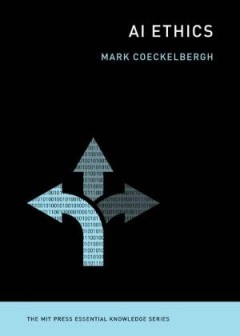
AI ethics
AI Ethics Mark Coeckelbergh Informazioni sul libro Commenti 0 / 5.0 La versione cartacea Tags Based on spectacular breakthroughs, a lot of hype surrounds AI. And AI is already used in a wide range of knowledge domains and human practices. The first has given rise to wild speculations about the technological future and interesting philosophical discussions about what it means to be hum…
- Edition
- -
- ISBN/ISSN
- 9780262538190
- Collation
- viii, 229 pages ; 18 cm
- Series Title
- The MIT press essential knowledge series
- Call Number
- 174.963 COE a
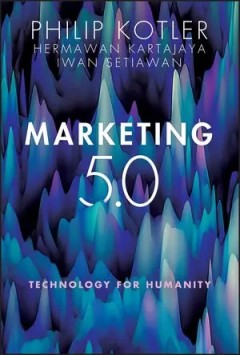
Marketing 5.0: Technology for Humanity
In Marketing 5.0, the celebrated promoter of the “Four P’s of Marketing,” Philip Kotler, explains how marketers can use technology to address customers’ needs and make a difference in the world. In a new age when marketers are struggling with the digital transformation of business and the changing behavior of customers, this book provides marketers with a way to integrate technologica…
- Edition
- -
- ISBN/ISSN
- 9781119668572
- Collation
- xii, 206 p. : il. ; 23 cm.
- Series Title
- -
- Call Number
- 658.8 KOT m
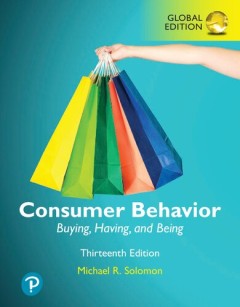
Consumer behavior: buying, having, and being
For consumer behavior courses. Beyond consumer behavior: How buying habits shape identity A #1 best-selling text for consumer behavior courses, Solomon’s Consumer Behavior: Buying, Having, and Being covers what happens before, during, and after the point of purchase. It investigates how having (or not having) certain products affects our lives; specifically, how these items influence how we…
- Edition
- 13th.ed
- ISBN/ISSN
- 9780135225691
- Collation
- pages cm
- Series Title
- -
- Call Number
- 658.834 2 SOL c
 Computer Science, Information & General Works
  Philosophy & Psychology
  Religion
  Social Sciences
  Language
  Pure Science
  Applied Sciences
  Art & Recreation
  Literature
  History & Geography