Filter by

The balance of power in world history
The balance of power is one of the most influential ideas in international relations, yet it has never been systemically and comprehensively examined in pre-modern or non-European contexts. This book redresses this imbalance.
- Edition
- -
- ISBN/ISSN
- 9780230507104
- Collation
- x, 279 p. : ill., maps ; 23 cm
- Series Title
- -
- Call Number
- [POL-IRT-56]
Security and climate change : international relations and the limits of realism
"Security and Climate Change moves from the intellectual foundations of Realism, to the activities of think-tanks such as the Cato Institute, through to the Clinton Administration's attempt to articulate a different politics of security. Lacy introduces readers to debates in International Relations theory and the broader issues at stake in the development of United States current foreign policy…
- Edition
- -
- ISBN/ISSN
- 0415324084
- Collation
- xii, 164 p. ; 24 cm
- Series Title
- Routledge research in environmental politics, 9.
- Call Number
- [POL-IRT-55]
Risk-taking in international politics : prospect theory in American foreign p…
Risk plays a dramatic role in international relations as leaders make decisions about issues such as war and peace, disarmament, and about lowering economic barriers to trade and investment. How a country's leaders think about risk in making foreign policy decisions is important in understanding why and how they make decisions. Rose McDermott applies prospect theory to four cases in American fo…
- Edition
- -
- ISBN/ISSN
- 0472108670
- Collation
- x, 242 p. : ill. ; 24 cm.
- Series Title
- -
- Call Number
- [POL-IRT-54]
Realism, idealism, and international politics : a reinterpretation
International relations is a discipline dominated by the debate between the realist and idealist paradigms. This book provides the most comprehensive critical review of the realist tradition to date. It looks closely at the terms 'realism' and 'idealism' and in doing so uncovers a broad range of interesting questions. Why, for example, do political realists see anarchy as being incompatible wit…
- Edition
- -
- ISBN/ISSN
- 0415069718
- Collation
- 1 online resource (x, 206 p.)
- Series Title
- -
- Call Number
- [POL-IRT-52]
Realism reconsidered : the legacy of Hans Morgenthau in international relations
"Williams and his contributors make an exciting and innovative contribution to Morgenthau scholarship.... Though there has been much work on Morgenthau and the problem of international morality, there has not been a volume that ties Morgenthau so directly into constructivist theory."--Ethics &International Affairs
- Edition
- -
- ISBN/ISSN
- 9780199288618
- Collation
- x, 278 S.
- Series Title
- -
- Call Number
- [POL-IRT-51]
Realism and international relations
"Realism and International Relations provides a critical yet sympathetic survey of political realism in international theory. Using six paradigmatic theories - Hans Morgenthau, Kenneth Waltz, the Prisoners' Dilemma, Thucydides, Machiavelli, and Hobbes - the book examines realist accounts of human nature and state motivation, international anarchy, system structure and the balance of power, inte…
- Edition
- -
- ISBN/ISSN
- 0521592291
- Collation
- 1 online resource (viii, 231 p.)
- Series Title
- Themes in international relations
- Call Number
- [POL-IRT-50]
Progress in international relations theory : appraising the field
An investigation of how international relations theorists can best evaluate the effectiveness of their discipline.
- Edition
- -
- ISBN/ISSN
- 0262050684
- Collation
- xiv, 503 p. ; 24 cm.
- Series Title
- BCSIA studies in international security
- Call Number
- [POL-IRT-49]
Political thought and international relations : variations on a realist theme
Political realism dominated the study of international relations during the Cold War and has again in recent years retuned to the centre of scholarly debate in international relations. In this book leading authors analyse various historical and philosophical themes, probing the potential and the pathologies of realist thought.
- Edition
- -
- ISBN/ISSN
- 9780199556274
- Collation
- 1 online resource (245 p.)
- Series Title
- -
- Call Number
- [POL-IRT-48]
Political theory and international relations
"Political Theory and International Relations is a fine piece of philosophical criticism and reconstruction that few established philosophers could have written.... This is a first-rate book on an issue as fundamental as it is neglected."--Henry Shue, Ethics
- Edition
- -
- ISBN/ISSN
- 0691076146
- Collation
- ix, 212 p. ; 23 cm.
- Series Title
- -
- Call Number
- [POL-IRT-47]
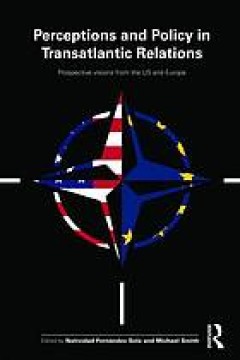
Perceptions and policy in transatlantic relations : prospective visions from …
Examines the tensions between Western Europe and the US over such issues as transatlantic security, policies towards terrorism and relations with Russia and the former Soviet Union, against the broader background of perceptions and misperceptions in transatlantic relations. This book is of interest to students of International Relations.
- Edition
- -
- ISBN/ISSN
- 0415454875
- Collation
- xiv, 216 p. : ill. ; 24 cm
- Series Title
- -
- Call Number
- [POL-IRT-46]
 Computer Science, Information & General Works
  Philosophy & Psychology
  Religion
  Social Sciences
  Language
  Pure Science
  Applied Sciences
  Art & Recreation
  Literature
  History & Geography