Filter by

Strong democracy : participatory politics for a new age
Since its appearance twenty years ago, Benjamin R. Barber's Strong Democracy has been one of the primary standards against which political science thinking and writing is measured. Defined as the participation of all of the people in at least some aspects of self government at least some of the time, Strong Democracy offers liberal society a new way of thinking about and practicing democracy. B…
- Edition
- -
- ISBN/ISSN
- 9780520242333
- Collation
- xxxvi, 320 p. ; 23 cm.
- Series Title
- -
- Call Number
- [POL-LIB-470]
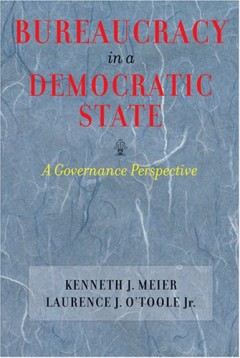
Bureaucracy in a democratic state: a governance perspective
Here, Kenneth J. Meier and Laurence J. O'Toole Jr. present a timely analysis of working democracy, arguing that bureaucracy—often considered antithetical to fundamental democratic principles—can actually promote democracy. Drawing from both the empirical work of political scientists and the qualitative work of public administration scholars, the authors employ a "governance approach" that c…
- Edition
- -
- ISBN/ISSN
- 9780801883576
- Collation
- xi, 181 p. ; 23 cm.
- Series Title
- -
- Call Number
- [POL-LIB-468]
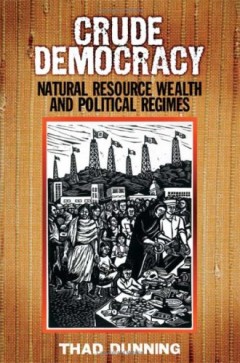
Crude democracy: natural resource wealth and political regimes
This book challenges the conventional wisdom that natural resource wealth promotes autocracy. Oil and other forms of mineral wealth can promote both authoritarianism and democracy, the book argues, but they do so through different mechanisms; an understanding of these different mechanisms can help elucidate when either the authoritarian or democratic effects of resource wealth will be relativel…
- Edition
- -
- ISBN/ISSN
- 9780521515009
- Collation
- xx, 327 p. ; 24 cm.
- Series Title
- Cambridge studies in comparative politics
- Call Number
- [POL-LIB-420]
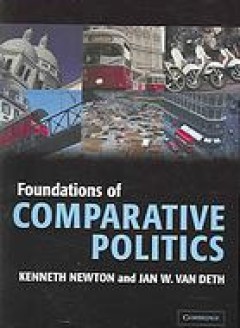
Foundations of comparative politics : democracies of the modern world
This authoritative new introductory text covers the key concepts, theories and issues involved in the study of comparative politics. Focusing on democratic government, it covers all important topics in the field from constitutional design and institutions; through mass and elite politics, groups, parties, the media and governments; to policy making and implementation. The final chapter consider…
- Edition
- -
- ISBN/ISSN
- 9780521829311
- Collation
- xxviii, 374 p. : ill. ; 26 cm.
- Series Title
- Cambridge textbooks in comparative politics
- Call Number
- [POL-LIB-205]

A centripetal theory of democratic governance
- Edition
- -
- ISBN/ISSN
- 0521883946
- Collation
- xiii, 237 p. ; 24 cm.
- Series Title
- -
- Call Number
- [POL-LIB-105]
- Edition
- -
- ISBN/ISSN
- 0521883946
- Collation
- xiii, 237 p. ; 24 cm.
- Series Title
- -
- Call Number
- [POL-LIB-105]
The democracy sourcebook
- Edition
- -
- ISBN/ISSN
- 0262042177
- Collation
- xii, 556 p. ; 23 cm.
- Series Title
- -
- Call Number
- [POL-LIB-54]
- Edition
- -
- ISBN/ISSN
- 0262042177
- Collation
- xii, 556 p. ; 23 cm.
- Series Title
- -
- Call Number
- [POL-LIB-54]
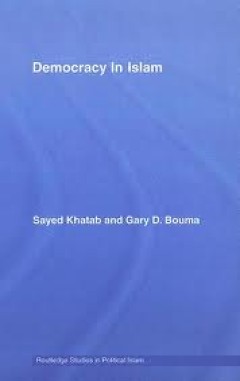
Democracy in Islam
- Edition
- -
- ISBN/ISSN
- 9780415425742
- Collation
- viii, 264 p. ; 24 cm.
- Series Title
- Routledge studies in political Islam ; 5
- Call Number
- [POL-LIB-09]
- Edition
- -
- ISBN/ISSN
- 9780415425742
- Collation
- viii, 264 p. ; 24 cm.
- Series Title
- Routledge studies in political Islam ; 5
- Call Number
- [POL-LIB-09]

A preface to democratic theory
- Edition
- Expanded ed.
- ISBN/ISSN
- 0226134334
- Collation
- xx, 176 p. : ill. ; 21 cm.
- Series Title
- -
- Call Number
- [POL-LIB-01]
- Edition
- Expanded ed.
- ISBN/ISSN
- 0226134334
- Collation
- xx, 176 p. : ill. ; 21 cm.
- Series Title
- -
- Call Number
- [POL-LIB-01]
 Computer Science, Information & General Works
  Philosophy & Psychology
  Religion
  Social Sciences
  Language
  Pure Science
  Applied Sciences
  Art & Recreation
  Literature
  History & Geography